
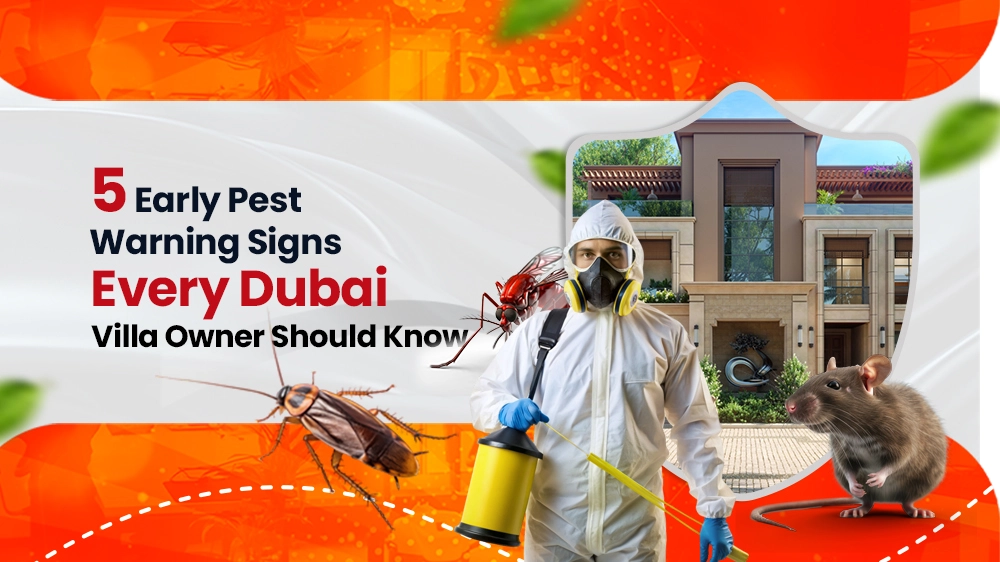
Owning a luxury villa in Dubai whether in the tranquil golf communities of Jumeirah Estates, green avenues of Arabian Ranches or the waterfront compounds of Palm Jumeirah, is a cornerstone of fine living in the UAE. However, maintaining such expansive properties comes with unique environmental and structural challenges.
While the modern Dubai villas boast of high-end architectural finishes, landscaped gardens, private pools and subterranean parking garages, they also create an ideal micro-environment for household pests.
Dubai’s year-round warmth, combined with underground utility lines, heavy garden irrigation systems and dynamic weather shifts, creates optimal conditions for pests looking for shade, moisture and food.
The biggest mistake villa owners in Dubai make is waiting for a full-blown infestation before taking action. Pests can rarely appear out of nowhere; and they leave subtle clues long before invading the main living areas.
Recognizing these subtle pest infestation signs early can save you thousands of Dirhams in the structural repairs and protect your family from health hazards.
Let’s have a look at the warning signs which every Dubai villa owner must monitor:
Fine sawdust and woodwork damage – signs of subterranean termites
Subterranean termites are among the most destructive pests affecting Dubai villas. Unlike the drywood termites, subterranean species live deep in the soil and chew through wooden elements from inside out.
Here’s what you should look for:
- Fine dust and frass – Piles of sand-like and fine droppings (frass) near wooden door frames or windowsills indicate active wood-boring activity.
- Buckling or blistered flooring – Engineered or parquet wood floors which appear warped, feel soft or look blistered are often mistaken for water damage when termites are actually destroying the sub-floor beneath.
- Mud tubes along the boundaries – look for earth-colored and thin mud tubes climbing up your villa’s exterior foundation walls, garden retaining walls and garage boundaries. Termites construct these walls, garden retaining walls or garage boundaries. Termites construct such mud conduits for travelling from moist soil into your homes without drying out in the desert heat.
- Hollow-sounding timber – Gently tap on the wooden skirting boards, built-in wardrobes, parquet flooring or decorative door frames. A paper-thin, hollow sound indicates which termites have eaten away from the internal wood structure.
Pepper-like droppings and grease trails – signs of American and German cockroaches
Cockroaches thrive in the warm and humid climate of Dubai. While the large American cockroaches fly in from outdoor sewers during the humid months, smaller German cockroaches directly nest inside utility and kitchen spaces.
Here’s what you should look for:
- A pungent, musty odor – An oily, faint or sweet musty smell inside the pantry drawers or under the sinks indicating significant roach population hiding behind wall voids.
- Egg cases and shed skins – As cockroaches mature, they shed their exoskeletons. If you find dark-brown oval egg cases under the kitchen appliances or inside drawer slides, it means there is a breeding colony already established.
- Smear marks along the baseboards – In areas of high roach traffic, you will notice oily and dark smear marks along the wall bases, pipe entry points and cabinet edges. These are known as pheromone trails left behind to guide other roaches to shelter and food.
- Dark specks in cabinets – Cockroach droppings look like small specks of black pepper or dark coffee grounds. Inspect the corners of cabinet hinges, kitchen pantries, behind built-in ovens and under sink plumbing.
Grease smudges and shredded materials – signs of rodents
Mice and rats are opportunistic invaders in Dubai villas, especially in communities with outdoor storage sheds, mature landscaping and exposed central AC ducting.
Here’s what you should look for:
- Spindle-shaped, dark droppings – Mouse droppings resemble dark, small grains of rice, while rat droppings are capsule-shaped and larger. They are commonly found along the false ceilings, garage walls and storage rooms.
- Nighttime scuttling sounds – Hearing tapping, light scratching or scuttling sounds coming from inside drywalls or false ceilings at night is a primary indicator of active rodent movement.
- Rub marks along walls – As the rodents have poor eyesight, they navigate by running along walls. Over time, the dirt and oil from their fur leave greasy and dark rub marks along villa garage entryways and skirting boards.
- Electrical wiring and gnaw marks – Rodents must constantly chew to wear down their teeth. Check the insulation on outdoor decorative string lights, AC compressor wiring and garage storage boxes for fresh teeth marks.
Indoor foraging lines and fine soil mounds – signs of pharaoh and desert ants
Ants are a constant challenge in UAE. While the black garden ants are mostly an outdoor nuisance, Pharaoh and desert ants establish colonies directly inside the villa walls and electrical outlets.
Here’s what you should look for:
- Ants around electrical outlets – Pharaoh ants are attracted to electromagnetic fields and frequently nest inside electrical junction boxes, light switches and AC thermostat panels which can cause short circuits if ignored.
- Strict ‘highway’ trails – Finding single-file lines of tiny ants marching across kitchen backsplashes, bathroom vanities and marble island counters indicate scout ants leading a worker colony for moisture and sugar sources.
- Dislodged soil mounds and grout – Small piles of fine soil or displaced tile grout around the swimming pool decks, patio pavers and villa thresholds signal subterranean ant excavation underneath your foundation.
Small rust-colored spots and unexplained bites – signs of bed bugs
With staycations, frequent international travel and guest visits in Dubai, bed bugs can easily enter the luxury homes that are tucked inside imported textiles, designer luggage or second-hand furniture.
Here’s what you should look for:
- Exoskeletons in furniture seams – Inspect the crevices of upholstered armchairs, headboard tufting and curtain hems for translucent and pale-yellow shed skins left behind by growing nymphs.
- Skin reactions upon waking – Waking up with clusters or lines of itchy, small red welts on the exposed skins suggests bed bug infestation in master suites or in guest rooms.
- Rust-colored spots on bedding – Reddish-brown and small blood smears or dark speckling on pillowcases, mattresses and headboards are key signs of pest infestation that are linked to bed bugs.
How do the villa layouts multiply pest risks in Dubai?
Dubai’s distinct residential architecture creates specific points of vulnerability which homeowners must closely monitor. Like:
- P-traps and dry floor drains – Unused maid’s quarters and guest bathrooms with dry floor traps allow the American drain roaches and sewer flies for crawling straight up into living spaces. Running water down all drains weekly keeps the water barriers intact.
- Garden soil and sub-floor irrigation – Heavy lawn watering keeps the garden soil soft and damp, which draws the subterranean termites directly towards the villa’s timber door frames and concrete perimeter.
- False ceilings and central AC shafts – The extensive network of air ducts and dropped ceilings across the large villas offer an invisible highway for birds, rodents and roaches to move between rooms undetected.
A practical and preventive checklist for the Dubai villa owners
Catching early pest infestation signs gives you a headstart but proactive prevention stops pests from entering in the first place:
- Schedule regular inspections – As per the Dubai Municipality guidance, residential properties benefit a lot from preventive pest inspection in every 2 months or 3 months for identifying vulnerabilities before populations build up.
- Store items off ground levels – Avoid storing cardboard boxes directly on garage floors. Cardboard absorbs ambient humidity and serves as both food and nesting material for termites, silverfish and cockroaches.
- Maintain garden boundaries – Keep the tree fronds, heavy shrubbery and bougainvillea vines pruned at least 30 cm to 50 cm away from villa exterior walls for eliminating natural bridges for pests.
- Seal structural micro-gaps – Apply heavy-duty silicone sealant around utility pipe wall penetrations, sliding door tracks and window frames. Remember, a mouse can get in through a gap in size of a pencil eraser.
Partnering with certified pest control professionals in Dubai
When you spot the early signs of pest infestation, quick action prevents minor issues from turning into expensive property repairs.
For Villa owners in Dubai, seeking expert and reliable care, partnering with Supreme Pest Control Services ensures that your property receives industry-leading protection. As a Dubai Municipality-approved premier pest management company, Supreme’s Pest Control Services blends years of local expertise with eco-friendly and advanced treatments, tailored specifically for residential compounds and luxury villas across UAE.
- Transparent 4-step service model – Get seamless experience of convenient scheduling, expert post-treatment guidance, precise technical execution, and custom property evaluations.
- Comprehensive villa defense – From subterranean termite barrier injections, targeted thermal imaging to micro-gel baiting for cockroaches and perimeter rodent control, Supreme PCS safeguards every corner of your property.
- Specialized diagnostic technology – Professional technicians use advanced tools for locating hidden nesting zones inside sub-floor structures, wall voids and AC shafts without compromising your home’s luxury finishes.
- Dubai Municipality-approved safety – All treatments strictly comply with the UAE public health regulations and Ministry of Climate Change and Environment standards, using odorless, low-toxicity formulations that are 100% safe for pets, seniors and children.
Protect your villa today
Your villa is your haven of comfort. Relaxation and health. By staying vigilant for early signs of pest infestation and pairing good maintenance habits with certified professional care, you can protect your luxury villa and safeguard your family and enjoy a lasting peace of mind year-round.
Frequently Asked Questions (FAQs)
What should I do upon noticing signs of pest infestation?
Avoid spraying off-the-shelf aerosol sprays directly onto the nests as this can often scatter pests deeper into wall voids. Take photos of the evidence like damage, mud tubes or droppings and contact a certified Dubai Municipality-approved pest control specialist for a professional site audit.
Why do cockroaches enter clean luxury villas?
Even the cleanest homes offer shade, moisture and warmth. Cockroaches frequently enter through central AC shafts, dry floor drains unsealed balcony sliders or utility openings in search of water, regardless of how clean the surface area is.
Can termites damage a villa built with concrete walls?
Yes. While concrete itself is immune to termites, the subterranean termites can travel through foundation micro-cracks and expansion joints to reach wooden elements inside the home – including door frames, parquet flooring, skirtings and kitchen cabinetry.
Are Dubai Municipality-approved pest control treatments safe for pets and children?
Yes. Certified Dubai Municipality-approved pest control companies use low-toxicity and odorless gel baits, eco-friendly larvicides and micro-encapsulated sprays which target pests directly while staying safe for domestic pets and families.
How often should a villa in Dubai undergo pest control inspections?
Due to Dubai’s heavy garden irrigation and warm climate, industry’s best practices recommend scheduling preventive pest inspections in every 2 or 3 months for villas. This keeps the protective barriers active throughout seasonal weather changes.
What are the most common early pest infestation signs in a Dubai villa?
The earliest pest infestation signs include hollow-sounding wooden door frames, dark-pepper-like specks inside kitchen cabinets, grease smudges along garage baseboards and dislodged sand around garden pavers.

By
supremepcs