Ants invade your home almost throughout the year due to a variety of reasons. If you reside in the Middle East, like Dubai, the sightings of ant infestations are very common.
Blame the mild warm or winter season across the UAE, but ants do get attracted to your property through doors, windows, cracked walls, leaky pipes, and more entryways than you can imagine. Sometimes, piled-up trash cans, leftover foods, dead pests, or other factors draw ants in, leading to severe infestation.
Pest control agencies often receive more than 10,000 complaints specifically about ant infestations each year. Understanding what attracts these insects into your home is the first step. By identifying their entry points and food sources, you can learn how to get rid of ants effectively and prevent future invasions.
Read this blog for detailed insights into the attractants and solutions to exterminate ants naturally from your home, business, or leisure space.
Impact of Ant Infestation on Your Health and Home
Whether you believe it or not, a report suggests that there are 12,000+ known ant species living around us. Some common types that invade homes across the UAE, which include carpenter, pharaoh, samsum, pavement, and fire ants.
What Health Risks Do Ants Bring?
Ants may appear harmless, but several species can pose real risks. If there are children and pets at home, monitor the species invading your space and apply the right ant control services.
- Pharaoh ants can contaminate food and spread germs as they move through kitchens and storage areas.
- Carpenter ants weaken wooden structures in commercial or residential estates by tunneling through damp or damaged wood.
- Fire ants are the most dangerous because they sting and inject venom. Their stings cause sharp pain, swelling, and itching. Some people may develop dizziness, nausea, or breathing difficulties after contact with the venom.
- Samsum ants are popular for their painful stings that can trigger severe allergic reactions. Preventing these insects from entering homes or yards is essential for safety.
Every insect species carries some level of danger, shaped by its activities and the way its colonies develop. There is no way to tell which type invades your premises unless you have ant specialists for on-site visits.
How Ants Damage Your Living Space?
Ants can cause more damage to your living space than many homeowners expect.
- Carpenter ants weaken structures by breaking down softened wood from the inside. Their hidden galleries often form inside walls, window frames, decks, and beams.
- Pharaoh ants spread quickly through small cracks and wiring lines, creating multiple colonies that invade kitchens and storage areas.
- Pavement ants nest under tiles, patios, and foundations, loosening soil and creating uneven surfaces. You might spot wood shavings, rustling sounds, or steady trails of ants around entry points.
Early detection is important because these species expand fast and quietly. Professional inspection from a pest control company can help prevent long-term structural damage.
Do Ant Trails Lead to More Household Pests?
High ant activity around kitchens can attract a range of other household pests. When species like odorous house, Argentine, or ghost ants build steady foraging lines, they leave behind scent markers and food debris that draw predators.
Spiders, cockroaches, and house centipedes often follow these trails because ants offer an easy food source. Certain bat species may also be drawn to areas with heavy insect activity.
Small reptiles and beetles can also appear when ant pathways become dense in your business or living space. As ant colonies grow, their activity can attract other household pests, making timely ant or cockroach control services even more important.
Is there any way you can prevent the dangers, safeguard property and belongings from ants, and avoid other pests? You can still protect your home before the infestation grows with appropriate treatments.
Professional pest exterminators can identify hidden ant colonies and stop the damage early. They provide targeted treatment that keeps your space safe, clean, and completely free from persistent ant problems.
Ways to Get Rid with of Ants Natural Methods
Calling a pest control specialist is the best option to understand how to get rid of ants from your home or office. Their thorough inspection and comprehensive treatments to control ant infestations are essential to prevent future risks.
Below are some natural ways that lay the foundation of a pest-free space. Sometimes, the following methods or preventive measures are shared with you after you receive professional pest extermination services.
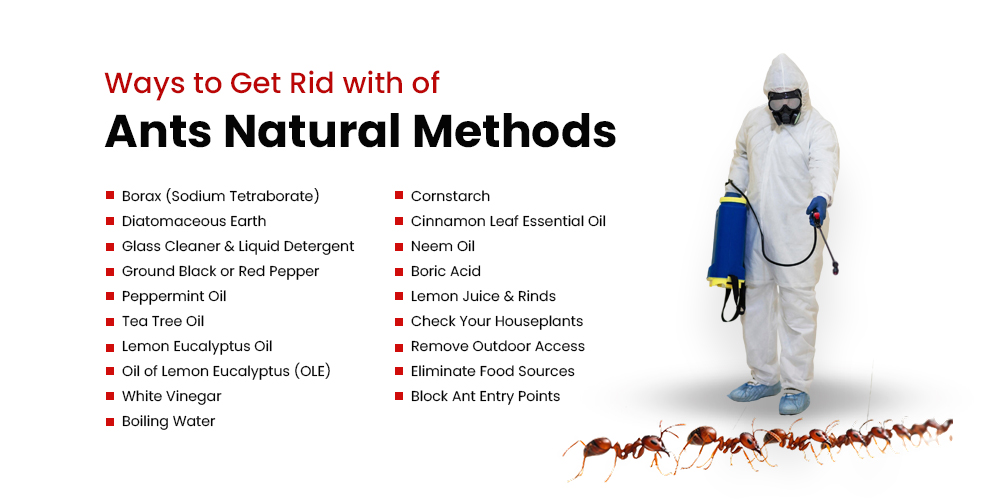
Borax (Sodium Tetraborate)
Mix half a teaspoon of food-grade Borax with sugar and water, soak cotton balls in the solution, and place them near ant trails. The sugar lures ants; the Borax slowly kills them when ingested, often carried back to the colony for wider effect.
Diatomaceous Earth
Sprinkle food‑grade diatomaceous earth (DE) along baseboards, cracks, and entry points. The fine powder abrades ants’ exoskeletons and dries them out, causing dehydration and death in ants.
Glass Cleaner & Liquid Detergent
A simple mix of liquid detergent or glass cleaner with water can be sprayed on baseboards and surfaces. This disrupts ants’ pheromone trails, wiping out the scent lines they follow, so they lose their path to food and shelter.
Ground Black or Red Pepper
Sprinkling ground black or red pepper around doorways, windows, and kitchen corners creates a pungent barrier. Ants dislike the smell strongly, so they avoid these zones and are discouraged from entering or crossing pepper lines.
Peppermint Oil
Add 10–20 drops of peppermint essential oil to water in a spray bottle and mist around door frames, windows, and baseboards. The strong mint scent masks pheromone trails and repels ants, discouraging entry and making the indoors inhospitable for them.
Tea Tree Oil
Like peppermint, tea tree oil works as a natural deterrent. Dilute a few drops in water and spray near entry points or behind appliances, its sharp scent disrupts ant navigation and makes your space unattractive to foragers.
Lemon Eucalyptus Oil
Use lemon‑eucalyptus essential oil diluted in water to spray around windows, doors, and kitchen cabinets. Its citrus‑eucalyptus aroma interferes with ants’ scent trails, reducing their ability to locate food or entry routes, and keeping them away.
Oil of Lemon Eucalyptus (OLE)
OLE containing concentrated citronella‑related compounds acts as a powerful ant repellent. Soak cotton balls with a few drops and place them near suspected entry points; the strong odour deters ants more robustly than many oils.
White Vinegar
Mix equal parts white vinegar and water, spray on countertops, baseboards, and around windows and doors. Vinegar’s acidity masks ants’ pheromone trails and repels them, often flushing out existing ants and preventing fresh entries.
Boiling Water
If you locate an outdoor anthill near your home, carefully pour boiling water directly into it. The heat instantly kills many ants at or near the surface, an effective, chemical-free method for colonies outside.
Cornstarch
Sprinkle small amounts of cornstarch near ant‑prone areas. Ants may ingest it, but because they can’t digest it properly, it may help reduce activity over time. This method works best as a supplementary deterrent.
Cinnamon Leaf Essential Oil
Dilute a few drops of cinnamon leaf oil in water and spray along windowsills, kitchen corners, and baseboards. The strong spicy aroma disrupts ants’ navigation and makes treated areas unappealing, especially near food storage areas.
Neem Oil
Mix a tablespoon of neem oil with water and spray it on plants and surfaces where ants roam. Neem’s natural insect‑repellent compounds disturb ants’ hormonal cycles, reducing their activity and discouraging colonization indoors.
Coffee Grounds
Scatter used coffee grounds near cracks, windows, and potential entry points. The strong scent can repel some ants and deter them, but results vary. Use as a supplementary measure, not a primary solution.
Boric Acid
Mix boric acid with a sweet attractant (like sugar or syrup) and place it near ant trails or hiding spots. Ants ingest the bait, carry it back to the nest, and gradually poison the colony, effective against many kitchen‑invading species.
Lemon Juice & Rinds
Spray a mixture of lemon juice and water around door frames, counters, and windows. The acidity and citrus scent disrupt ant pheromone trails. Placing lemon rinds near entry points adds an extra natural barrier against reinvasion.
Check Your Houseplants
Inspect plant pots and soil regularly, as ants may nest in damp soil or feed on debris around plants. Turning soil occasionally, avoiding over‑watering, and checking drainage holes help prevent ants from establishing colonies indoors.
Remove Outdoor Access
Seal cracks in walls, gaps around doors, windows, and foundations. Trim vegetation close to your home and ensure no wood or debris is piled near walls. Blocking common outdoor entry pathways reduces ant infestation risk drastically.
Eliminate Food Sources
Store food in airtight containers, clean up crumbs and spills immediately, and avoid leaving pet food exposed. Ants are drawn to leftover crumbs and liquids. Removing these supplies reduces pests and discourages them from building new colonies indoors.
Block Ant Entry Points
Use caulk or weather‑proof sealants around windows, door frames, and baseboards. Cover vents or gaps, repair damaged screens, and ensure doors and windows close properly. Physically blocking entry points denies ants easy access to your home.
How to Get Rid of Ants in Your Kitchen
Ants are present in almost every corner of your home. Pests are mostly noticeable in the kitchen compared to the bathroom, living room, garage, or other spaces. If you don’t want to deal with an ant infestation in your cooking space and prevent contamination risks, do the following:
-
Find All Potential Entryways
The best way to manage ants and prevent invasion safely is to identify their entry points. Follow the trails to determine where they come from. Some of the obvious places to spot these insects include cracks in building foundations, air vents, damaged floors and ceilings, and places marked with old caulk lines.
Ants enter your kitchen from a point and leave through another. If you want to eradicate the entire colony of ants, use a gel bait to attract and follow the way they head towards.
Sometimes, using baits a few times can eliminate ant invasions effectively. Once you get clear indications of maximum removal, focus on ant-proofing your premises to extend the results.
Seal any cracks or crevices where ants enter your kitchen using caulk or other preventive measures suggested by your pest controller.
-
Clean Your Kitchen Regularly
Meal preparation areas are like the hotspots for both ant infestations and their effective control. A dirty space or excessive smells coming from a variety of foods act as attractants for ants.
Cleaning the culinary corner, not leaving behind dirty dishes, avoiding clogging sinks, and proper disposal of trash can keep pests away. Be it the kitchen worktops or the adjacent floors, no food crumbs should be lying around. You can sweep and mop the areas on a regular basis to break the chain of ant infestation.
-
Store All Foods Safely
Ants are drawn to aromatic and sugary items in your pantry, such as pet food, grains, sugar, baking ingredients, and overripe fruits. Storing these items in airtight containers is one of the most effective ways to prevent ant infestations in your cooking area.
You must also avoid placing containers too close together, as concentrated scents can attract ants and other pests.
-
Choose Natural Remedies
Several homemade remedies can help control ants in your cooking area. Strong chemical pesticides are not always ideal, as they can leave harmful residues on surfaces that may contaminate food.
Below are some natural solutions to eradicating the ants at their exact source.
- Borax
Sodium borate or borax is a naturally occurring mineral that you mostly use as a cleaning agent in the laundry. Wondering how to get rid of ants using borax? The solution is very simple!
You need half a teaspoon of borax, one teaspoon of salt, 8 teaspoons of sugar, and mix them well in one cup of water. Wait until all these ingredients dissolve thoroughly, then soak cotton balls in this solution. Make sure you apply it in every corner, especially ant-prone areas, to keep premises free from ants.
Remember, borax can be dangerous for pets and children, if this mineral is inhaled, ingested, or comes in direct contact with skin. It may have adverse side effects like diarrhoea, nausea, skin irritation, or vomiting.
Reach out to our pest specialists to find out how to eradicate ant infestation with sodium borate without any health complications. Continue scrolling below to find out more about such natural remedies to repel ants.
- Liquid dish soap
It is easier to remove ants on kitchen counters with a few drops of liquid dish soap in water. The soap breaks their trail pheromones, disorienting them and preventing others from following. It also weakens their exoskeletons, allowing easy removal while keeping surfaces clean and ant-free.
- Peppermint
Prepare a solution by mixing 10 to 20 drops of peppermint essential oil with 2 cups of water. Use a clean spray bottle to apply this mix on doors, windows, and baseboards to repel ants using natural methods.
- Lemon eucalyptus oil
You must use this oil raw instead of an undiluted condition and apply it using cotton balls or a clean piece of cloth. Identify the ant-prone areas in your office or residential complex and deter ants using lemon eucalyptus oil.
- Tea tree oil
Take 2 cups of water and add 5 to 10 drops of tea tree oil, mix well, and store it in a spray bottle. Use this solution on infestation-prone areas with the help of cotton balls. For effective results, include this in your kitchen cleaning routine.
- Ground red or black pepper
Sprinkling black or red pepper around kitchen appliances, baseboards, and other entry points can help deter ants. The strong scent irritates their sensory organs, discouraging them from entering your kitchen, bathroom, or other indoor areas.
- Boric acid
When preparing this solution, take half a teaspoon of boric acid, one cup of warm water, and mix 8 teaspoons of sugar. Soak cotton balls with it and use them on ants or their trails to eradicate infestation in your kitchen.
- Coffee grounds
To repel ants from your cooking area, use freshly brewed coffee grounds. Place them on a paper plate or index card near sinks, windows, and pet bowls to help keep ants away naturally.
- White vinegar
To prepare this solution, take an equal quantity of water and white vinegar. Use this mix to keep kitchen countertops, floors, and other hard surfaces clean. You can apply the mixture using paper towels to wipe the trails or spray it directly on ants as a pest repellent.
Hire a reliable ant exterminator
Dealing with minor ant infestations is possible with the methods discussed above. However, if your residential apartment or office building has too many ants to control with natural methods, consult professionals.
Hiring pest specialists helps you understand the severity of the invasion and get complete insights into pests invading your property. They have the knowledge, expertise, and equipment to ensure complete ant removal without posing any impact on your health and environment.
Interested to learn more about licensed pest control methods that are effective and quick? Keep reading!
Commercial Solutions and Pesticides to Stop Ant Entry
Eliminating ants from high-end properties or businesses takes more than routine cleanings and customized treatments. You need experts for a deep inspection and to carefully evaluate the level of invasion. Once you get a detailed analysis, it becomes easier to pick pesticides or opt for commercial or integrated pest management services.
Fast-Acting Repellent Sprays
When it comes to picking chemical pest control methods, repellent sprays are more effective in reducing infestations. According to a recent report, chemical sprays significantly reduce ant populations when used in follow-up or multi-step treatments. For lasting results, repeated applications are often necessary to keep ants away long-term. – Source
Chemicals can target specific categories of pests and exterminate them with higher precision. Ant repellent sprays consisting of pyrethroids and pyrethrin are biodegradable, which makes them more trusted solutions for pest control.
Some repellents use neonicotinoids, which are basically synthetic compounds that can attack the nervous system of ants fast. Applying this chemical through spray bottles can kill visible ants rapidly and create a barrier against future infestation risks.
Ultra-low volume (ULV) fogging is an effective method for controlling small pest infestations in kitchens or other areas of your home. To fully eliminate an ant colony, including the queen, strong pesticide formulations are often required.
For safer, eco-friendly alternatives, such as natural or plant-based ant repellent sprays, contact our professional pest management team for guidance and recommendations.
Targeted Ant Baits and Traps
Businesses or homeowners don’t rely solely on chemical repellents or extermination methods to control ants. They depend on specialists to recommend and place baits and traps in the cooking area or other vulnerable areas to eradicate insects.
Some of the commercially approved solutions for ant removal include gel baits, granules, and bait stations. The traps are specifically designed to lure pests and feed them food with a slow-acting insecticide, which they can carry back to their colonies. These baits ensure the poison successfully reaches the queen ant and other members in the colony.
For optimal extermination, baits should be placed along ant trails, near entry points, or around kitchens and baseboards. Unlike sprays that kill only visible ants, targeted baits address the root problem, preventing re-infestation.
Regular monitoring and strategic repositioning of ant traps significantly improve their effectiveness in kitchens or other areas of your property. Professional pest control experts can identify the most effective locations for baits and traps, ensuring long-term results. For rapid relief from ants or other pests, contact a licensed exterminator who can provide safe and reliable solutions.
When is the Right Time to Call an Exterminator
Some signs are there that clearly indicate that your premises have uninvited pests, specifically an ant invasion. Once you recognize them, don’t hesitate to reach out to an exterminator. Let’s discuss these aspects in detail.
Clear Indicators You Need a Pest Expert
- Ants keep appearing on counters, in pantries, or along baseboards despite regular cleaning.
- Trails or nests indoors signal established colonies likely to expand further throughout your home.
- Visible damage to walls, packaging, or food indicates a serious ant infestation.
- Other pest sightings near your home may suggest predators are feeding on ant colonies.
Tips to Hire a Safe Eco-Smart Exterminator
Looking for a pest controller specialising in ant removal? Here’s how to approach a trusted professional for eradicating pests.
- Verify credentials and licenses to ensure the company is legally qualified for pest control.
- Choose experts who follow health and safety standards for effective and secure ant treatments.
- Opt for transparent services that clearly list child- and pet-safe active ingredients.
- Hire eco-conscious specialists offering low-toxicity, integrated pest management (IPM) solutions.
- Confirm follow-up services and guarantees to ensure long-term ant control and prevention.
Key Takeaways
- Identify and block entry points to prevent new ant trails from forming inside your home.
- Maintain cleanliness by wiping spills, removing crumbs, and storing food properly to reduce attractants.
- Use natural repellents like peppermint oil, tea tree oil, lemon eucalyptus, and vinegar to disrupt ant trails and deter movement.
- Try household ingredients such as coffee grounds, pepper, and dish soap mixtures for quick, safe ant control.
- Apply natural baits like borax or boric acid carefully to target entire ant colonies when needed.
- Keep kids and pets safe by placing any homemade or natural baits out of their reach.
- Monitor regularly to ensure ant activity decreases and reapply natural treatments when trails reappear.
Conclusion
Ant invasions in Dubai can strike any home, any season. Though small ant problems may seem manageable, larger infestations can disrupt your living conditions and impact your mental peace.
While the natural remedies can help you eliminate ants temporarily, you need a trusted pest control company for permanent relief. Whether you’re dealing with an active ant infestation or need a custom preventive plan for your home or business, Supreme PCS is here to help.
Our professional ant exterminators focus on long-term protection, sealing entry points, and managing ongoing risks. With our guidance, you can enjoy an ant-free environment all year round.
Don’t let ants take over! Schedule a call today and let our experts provide reliable, eco-conscious, and effective ant control for your property.
Frequently Asked Questions About How to Get Rid of Ants
How can I get rid of ants forever?
To permanently exterminate ants from your home and business, you need specialised treatments with a colony-focused approach. First, identify the species and locate nests.
Use bait stations with borax or commercial ant gels that worker ants carry back to the colony. Seal food, water, and entry points, caulk gaps, and store food in airtight containers. Trim vegetation and remove debris near foundations to reduce outdoor nesting.
Maintain cleanliness by wiping spills and storing pet food. Repair leaks and control moisture around the house. To eliminate large ant colonies, hire specialists from Supreme PCS for targeted treatments. Follow-up inspections and preventive maintenance stop re-infestation.
Is there any way to remove ants immediately from my home?
Kill visible ants with contact sprays or a soapy water spray for instant removal. You can also apply boiling water to small outdoor nests to eliminate active ants and disrupt the colony.
Specialists often recommend applying food-grade diatomaceous earth along indoor ant trails. This powdery substance damages the protective exoskeleton of ants, leading them to dehydrate.
Wipe trails with a vinegar-and-water mix to erase scent markers and slow further foraging. Place fast-acting gel baits near activity zones so workers carry the toxin back to the colony. Seal obvious entry points and remove food sources that attract scouts. Quick actions reduce numbers and buy time while you target the colony.
Which smells repel ants effectively?
Ants rely on pheromone trails, so strong odours that mask signals work best. White vinegar and citrus peels disrupt navigation and scent trails.
Essential oils like peppermint, tea tree, and eucalyptus can help repel certain ant species through their strong scents. However, some of these oils may cause skin or respiratory irritation in pets and children. Apply them carefully and keep treated areas out of reach.
Cinnamon, cayenne pepper, and bay leaves create natural barriers that ants avoid.
Many of these scents are safe but must be reapplied often. Research on exact effectiveness varies by species and situation, or approach your pest control company to explore ant repellents.

Jeyakanthan Ramamoorthy